We studied a social VR platform two months after its public launch.
Meta released Horizon Worlds to the public in December 2021. Our course team asked how its design shaped community: where people gathered, how they handled trolls and harassment, and how its creators learned to build.
From February 1 to March 29, 2022, each of us visited different worlds and events and wrote field notes after most visits. I joined the weekly LGBTQ+ meetup and the Horizon World Tours creator events, and I interviewed three of our six participants.
I spent my first few weeks in the meetup listening before asking anyone for an interview, so that recruiting would not intrude on a support space.
- 50
- Hours on the platformApproximately, across three researchers.
- 6
- Semi-structured interviewsI ran three. Most participants were world creators.
- 9
- Weeks of fieldworkFebruary 1 to March 29, 2022.
We chose interviewees through purposeful sampling, in VR and through Facebook groups and YouTube channels about Horizon.

Recruiting was difficult. Most encounters were brief, with no expectation of meeting again. Casual visitors rarely agreed to an interview, while world creators often did, so our interviews lean toward people who build on the platform.
We analyzed the notes and interviews against Amy Jo Kim’s principles of community design, Ray Oldenburg’s description of third places, and Lave and Wenger’s communities of practice.
Personal safety tools were dependable. World tools were not.
We observed two kinds of disruption. Trolls disrupted a whole world with noise, blocked views, or thrown objects. Harassers targeted individuals, especially newcomers and people with feminine avatars, and in VR this included unwanted physical approaches.
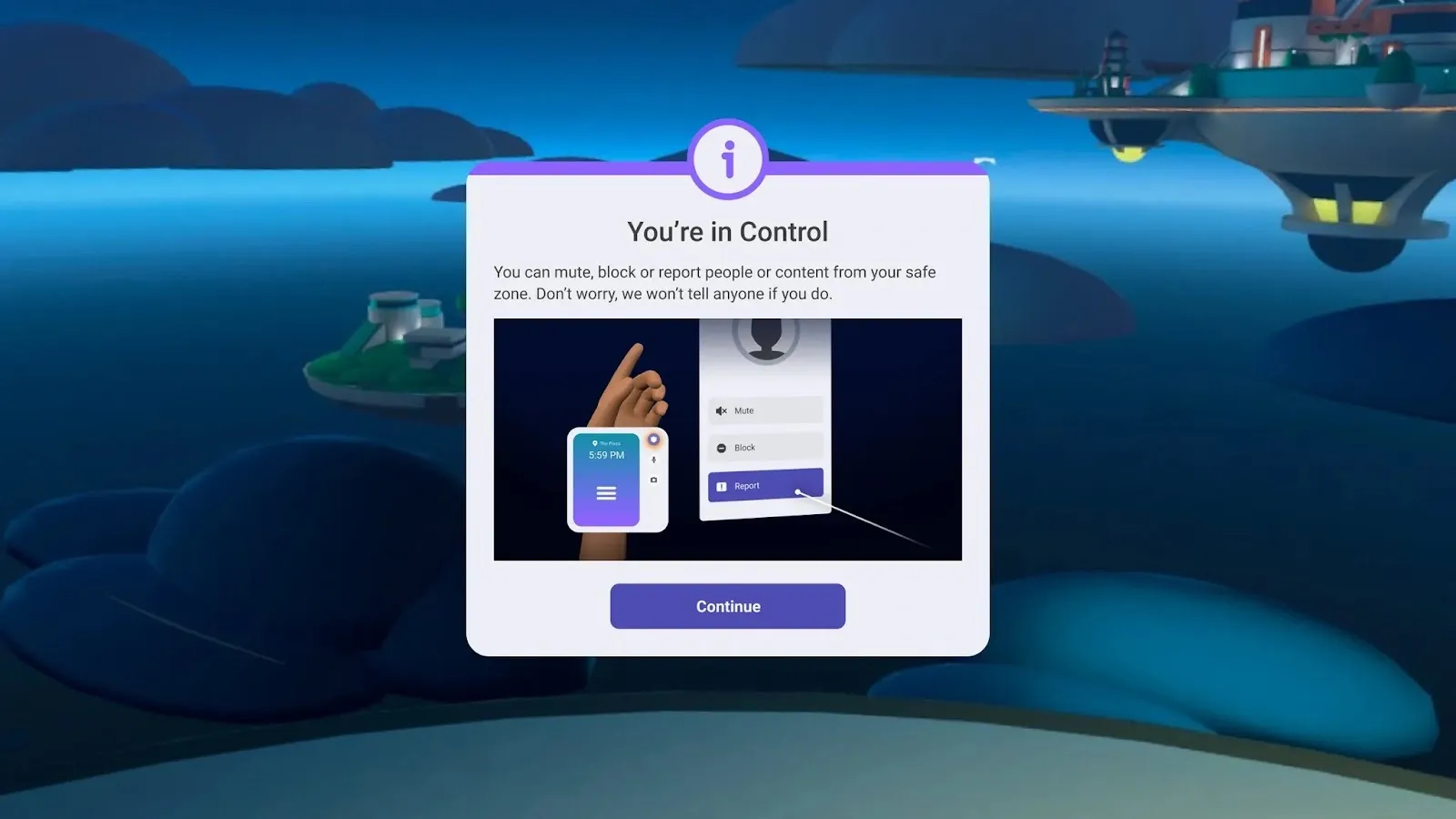
Meta’s tools worked at the level of the individual. The tutorial taught mute, block, and report. The Safe Zone removed a person from the world to a private panel where they could act on others. Personal Boundary, introduced in early February, kept other avatars about four feet away. In March, during our fieldwork, Meta made it adjustable.
World tools were less dependable. During one LGBTQ+ meetup I attended, the regular host was away and the volunteer host had no host permissions. Trolls entered and harassed her. Attendees tried Poll to Remove, but it did not work for any of us, and the group ended up blocking each troll one person at a time.
“We made a stick that you can now click with your index trigger and [the trolls are] gone.”
World creator, interview
Creators described scripting their own removal tools and holding areas when official tools failed. Nothing operated between the whole platform and a single world, so a community that met across several worlds had no shared way to moderate.
Meta built tools for individuals. Creators scripted tools for their worlds.
Host mute and remove, Poll to Remove
At one LGBTQ+ meetup I attended, the regular host was away and the volunteer host had no host permissions. Trolls entered and harassed her. Attendees tried Poll to Remove; it did not work for any of us, so the group blocked each troll one person at a time.
Early 2022. The platform has changed since.
The platform was not a third place, but many of its worlds were.
Oldenburg describes third places, such as cafes and bars, as neutral, accessible, playful places where conversation is the main activity and regulars return. Horizon Worlds as a whole did not fit that description. Some worlds were timed games that expected players to stay, and private worlds were not open to everyone.
Individual worlds came much closer, and their builders shaped the conversation. Builders set how far voices carried: in one shooter game everyone could hear everyone, meditation worlds kept audio short-range, and a comedy club amplified whoever held the microphone.
In my field notes, the Soapstone Comedy Club worked like a late-night bar for adults. Most people gathered at the stage while a smaller group talked about work and their day at the bar. No one pressed me to speak, so I could observe without unmuting.
-
Shooter game
Everyone could hear everyone.
-
Meditation world
Audio stayed short-range.
-
Comedy club
The microphone amplified whoever held it.
Creators learned from one another, and a small commission market had begun.
The creator community
We described the creator community as a community of practice: people learned to build by doing it and by watching more experienced builders. Intro to Creation sessions taught scripting in worlds designed for teaching. The World Tours pre-show let creators share new work and recruit collaborators. Meta’s Horizon team held scripting office hours.
Creators also tested with visitors. One team released a game update daily for two months and tested each release with 13 people.
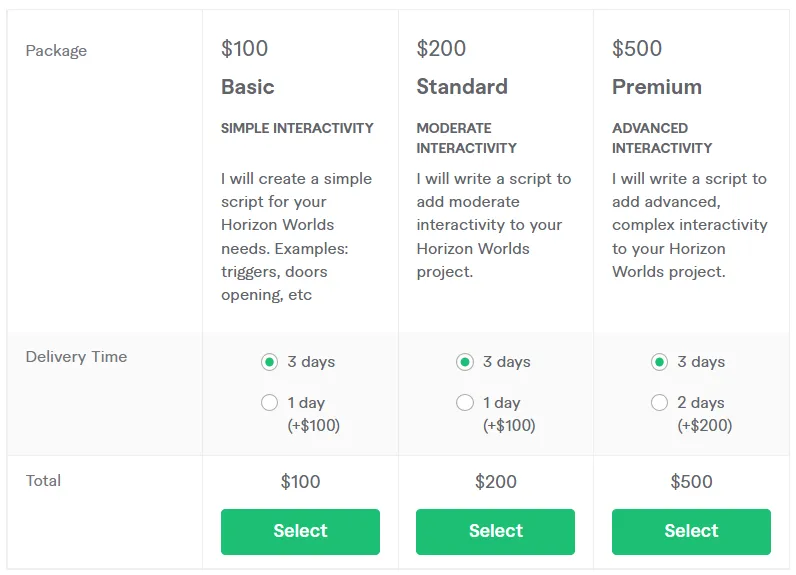
The app had no way to pay for work, so commissions happened elsewhere. The freelance listings we found started at $25 for small builds and reached $1,500 or more, and most had one to six reviews. We studied this part of the community least, so the listings suggest an early, small market rather than measure one.
A course paper and class presentation.
We wrote a 38-page paper and presented our findings to the class in spring 2022. The study describes the community; it did not propose or test design changes.
Our six interviews lean toward world creators, and fieldwork covered nine weeks of a platform that changed while we studied it. The findings describe Horizon Worlds in early 2022, not social VR in general.
This was my first study of moderation in practice. I later studied misinformation interventions and media provenance at the University of Washington.
Looking back, the workarounds pointed at product gaps.
My reading now; the paper made no recommendations.
The clearest signals were workarounds: creators scripted removal tools, a community blocked trolls one person at a time, and commissions moved off the platform.
These come from nine weeks in early 2022 and interviews that lean toward creators. They are questions a platform team could test, not findings about social VR.
| What we observed | What a platform team could take from it | Who would act |
|---|---|---|
| No middle layerNothing operated between the whole platform and a single world. | Moderation for a community that meets across several worlds. | Trust and safety product |
| A host without permissionsThe volunteer host could not act, and Poll to Remove did not work. | Let hosts hand their permissions to a stand-in, and treat a failed removal tool as a safety defect. | Safety engineering |
| Creators’ own toolsCreators scripted removal tools and holding areas when official tools failed. | Study what creators built as a starting specification for official tools. | Safety and creator tools, with research |
| Voice rangeBuilders set how far voices carried, and that shaped how people talked. | Treat audio range as a creator control for setting a world’s norms. | Creator tools |
| Commissions elsewhereThe app had no way to pay for work, so creators were paid off the platform. | Study that market before building payments; we studied it least. | Creator monetization, with research |