Oral histories, made interactive.
Empathy Bytes is a Vertically Integrated Projects team at the Georgia Tech Library. It interviews campus communities and looks for ways to make those histories interactive or immersive, such as a sound walk.
In fall 2021 I joined the website effort and worked on an iOS augmented reality app in Swift. The next two semesters, I focused on the web track.
Spring 2022: critique first, then prototype.
As co-lead of a four-person web track, I planned the semester as three milestones, with flex weeks built in for exams and overruns.
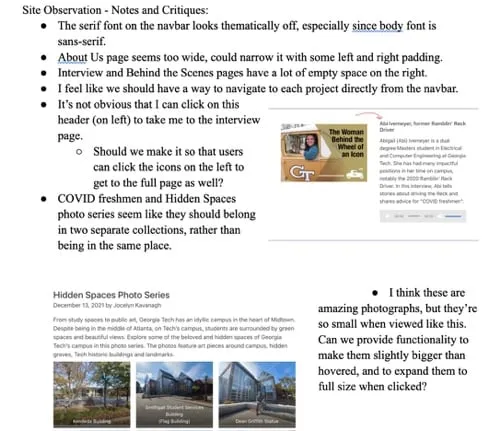
- Site critiques. Each member reviewed the existing WordPress site for usability and accessibility. The review doubled as onboarding for new members.
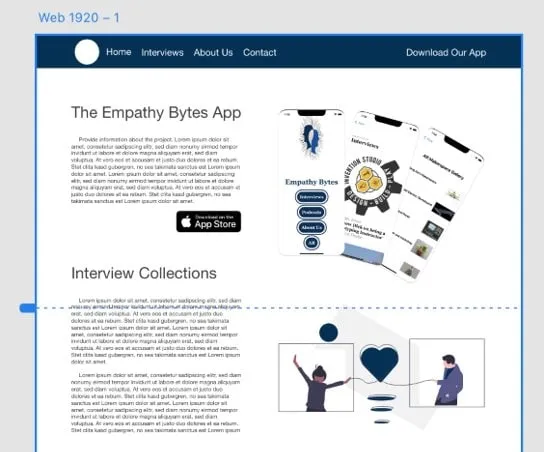
- App promotion pages. A design sprint for a page promoting the team’s augmented reality app: research, ideation, and critique of each other’s mockups.
- Subteam feature pages. Pages showing each subteam’s work behind the scenes. Mine featured the Unity team.
I ran weekly check-ins, compiled the track’s work, and presented it at the monthly all-team meetings. By the end, the track wanted to leave WordPress for hand-built HTML, CSS, and JavaScript, where styling and interaction would be easier to control.
Fall 2022: from four people to more than ten.
Interest in the web track more than doubled, so most of my work became infrastructure and support.
I chose the stack: Gatsby and React, with WordPress kept as a content source. I set up the repository, permissions, and a GitHub Pages deployment pipeline. Every developer’s first task was to build one component and open a pull request, so everyone learned both the framework and the shared review process before real work began.
We worked in three two-week sprints. I met with team members individually, pair-programmed through problems, reviewed code, and wrote the documentation that the next semester would inherit.
The repository is archived; its live site no longer resolves.
Leading a larger team meant less building.
The more people joined, the more my job became making sure each of them could contribute: a friendly start, a clear first task, and someone to ask. I left the team before my final semester to focus on graduate applications.